Seamless Gutters Before Winter: Sizing, Downspout Placement and Drainage Planning
A continuous gutter run can fit the roofline neatly and still depend on several design decisions to drain effectively. The channel must handle the runoff reaching it, the outlets must provide sufficient capacity, and the downspouts need suitable discharge locations.
Seamless gutter sizing is therefore one part of a complete drainage plan. Before winter, that plan also needs to account for debris, mounting conditions and the paths that rainwater and snowmelt will follow around the home.
At Four Seasons Roofing, we evaluate gutters alongside the roof edge and surrounding exterior components. The goal is a system suited to the property, with clear expectations for installation, maintenance and water management.
Seamless Runs Still Need Correct Sizing and Outlets
Seamless gutters are formed in continuous lengths to fit the home. Reducing the number of joints along a run can reduce potential leak points, but it does not establish how much water the system can carry.
Capacity also depends on the gutter’s dimensions, slope, outlet arrangement and downspouts. A custom fit needs to be supported by an appropriate drainage layout.
Connection Points Remain Part of the System
Corners, end caps and outlets still require connections. Their condition and installation affect performance even when the main gutter run is continuous.
This is why seamless construction should be considered alongside the complete installation plan. The material’s appearance and the system’s drainage requirements need attention together.
Gutter Size Starts With the Roof Area Feeding Each Run
The relevant measurement is the roof area draining toward a particular gutter section. The home’s interior square footage does not describe that drainage area.
Roof configuration and design rainfall intensity also influence sizing. Different sections of the same home may collect different amounts of runoff, so one uniform assumption may not suit the entire roofline.
Valleys Can Concentrate Water at Specific Locations
A roof valley brings water from adjoining slopes toward a smaller collection area. That concentrated flow needs consideration when selecting the gutter, nearby outlet and downspout arrangement.
Increasing the gutter size may be appropriate in some situations, but the outlet and discharge path must also accommodate the flow. A wider channel alone does not resolve every restriction elsewhere in the system.
Downspout Placement Determines How the System Empties
Downspouts carry water out of the gutter channel. Their number, dimensions and locations need to work with the roof area served and the length of each run.
A layout based only on placing downspouts at convenient corners can overlook how runoff reaches those outlets. The drainage plan needs to consider the full path through the system.
Long Runs Need Coordinated Outlet Locations
The distance water travels through a gutter affects the layout. Depending on the roof and selected system, more than one outlet may be appropriate.
Downspout placement also needs to account for windows, doors, porches and other exterior features. A workable arrangement balances drainage capacity with a route that can be securely installed and maintained.
Those decisions are most useful before the gutter layout is finalized, while the collection and discharge points can still be coordinated.
Discharge Locations Need a Clear Route Away From the Home
Moving water down the wall completes only part of the drainage process.
The discharge point needs to direct it toward a suitable area where it can continue away from the foundation.
Ground slope, planting beds, retaining walls and paved surfaces can affect that route. A downspout positioned correctly at the roofline may still need a different termination arrangement at ground level.
Walkways and Entrances Deserve Particular Attention
A discharge location beside a frequently used path can send water across the walking surface. During freezing conditions, that water may create an icy area.
Extensions and other drainage connections also need to fit the property without obstructing access. Where a downspout connects to an existing underground line, the downstream route and condition of that line need consideration.
Four Seasons Roofing’s article on property conditions that affect gutter and drainage planning explains how roof layout and ground-level conditions influence the project.
Does Your Gutter Plan Account for Where the Water Goes After It Leaves the Roof?
Four Seasons Roofing’s gutter installation, repair and protection services address seamless systems and existing gutter concerns. A property-specific evaluation can clarify sizing, downspout locations and the proposed discharge arrangement.
Slope and Attachment Need a Sound Roof Edge
Gutter slope guides water toward the outlets. The support system needs to maintain that alignment rather than allow low areas to develop along the run.
The attachment surface matters as well. Deteriorated fascia or loose existing materials can affect whether the proposed installation has suitable support.
Roof-Edge Conditions Can Change the Installation Scope
Some conditions are visible during an initial evaluation. Others may become apparent when existing gutters are removed.
Flashing and the position of the gutter also influence whether roof runoff enters the channel correctly. Water moving behind the system requires evaluation rather than an assumption that a larger gutter will correct it.
Four Seasons Roofing’s roof repair services address roofing and flashing concerns that may need attention alongside gutter work. Any additional repairs need to be identified and addressed in the project scope.
Winter Drainage Planning Needs Realistic Expectations About Ice
Rainwater and melting snow still need an open drainage path during colder weather. Debris, restricted outlets and blocked downspouts can interfere with that path.
Freezing temperatures introduce another consideration: water remaining in or around the system may freeze. Gutter planning can address drainage conditions, but it cannot control every winter roof condition.
New Gutters Do Not Resolve Ice Dams by Themselves
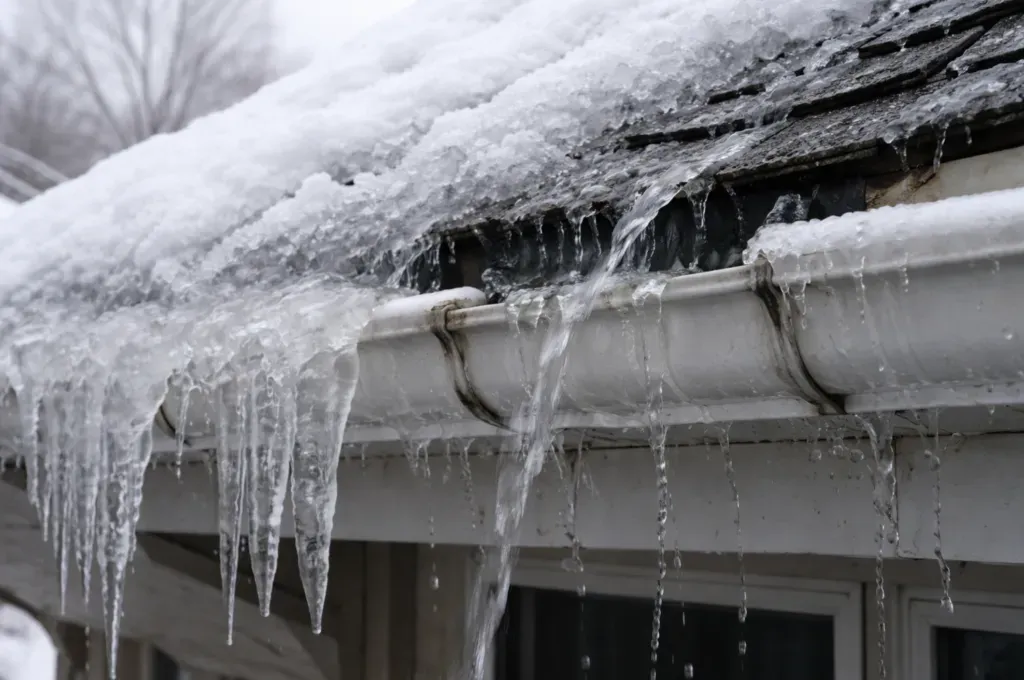
An ice dam forms when snow melts on a warmer portion of the roof and refreezes near a colder edge. Uneven roof temperatures, often associated with heat escaping from the home, are central to that process.
A seamless gutter system does not correct those underlying thermal conditions. Recurring ice buildup may therefore require evaluation beyond the gutter channel.
That distinction keeps the recommendation focused. Gutter sizing, roof-edge repairs and other building concerns serve different purposes and need to be evaluated accordingly.
Gutter Protection Changes Maintenance Needs, Not the Need for Inspection
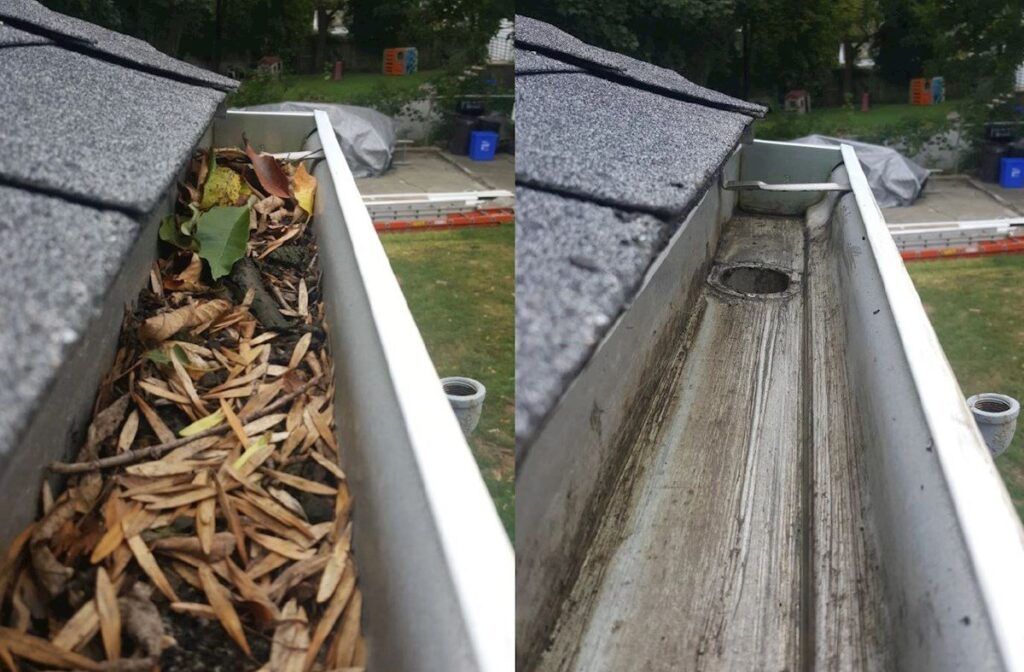
Leaves, seeds and small debris can restrict water movement through the channel or collect near an outlet. The type and amount of material reaching the roof influence ongoing maintenance needs.
Four Seasons Roofing provides gutter guard options. Their suitability depends on the selected product, roof conditions and the debris affecting the property.
Guards Must Work With the Selected Gutter System
A protection product needs to be compatible with the gutter profile and installation arrangement. It does not replace adequate channel capacity, properly positioned outlets or a suitable discharge route.
Seamless gutters and guards still require periodic inspection and maintenance appropriate to the system. Product-specific care requirements belong in the planning conversation before installation.
A Useful Proposal Describes the Complete Drainage Layout
A gutter proposal is easier to evaluate when it identifies the planned runs, gutter dimensions, downspout sizes and outlet locations. It also needs to explain where the water will discharge.
The scope should distinguish gutter installation from any roof-edge repairs or additional drainage work. That clarity helps establish what the completed project is intended to accomplish.
Scheduling Depends on Access and Site Conditions
A prewinter project needs a realistic installation window. Weather, safe access and any repairs discovered during removal can influence the sequence.
The proposal should establish how concealed conditions and scope changes will be communicated. Drainage work beyond the gutter system also needs clearly assigned responsibilities.
For Four Seasons Roofing, a useful recommendation connects the roof’s runoff with the collection system and the property below. Correct sizing matters, but the complete route—from the roof edge to the final discharge point—determines how the planned components work together.
Ready to Define Your Home’s Gutter Needs Before Winter Weather Arrives?
Request a free estimate from Four Seasons Roofing to discuss seamless gutters, downspout placement and existing drainage conditions. A site evaluation provides the basis for a recommendation suited to your roofline and property.
RELATED GUTTER and roof drainage RESOURCES